

blue bell brightening and moisturizing fresh aloe vera juice and brown algae gel
to help keep skin soft, moisterized and brighten
Follow My Blog
Get new content delivered directly to your inbox.

A summertime delicacy
The once-forgotten khao chae has been brought back to life thanks to social media trends. Here are the best places to try the dish which dates back to the King Rama V era
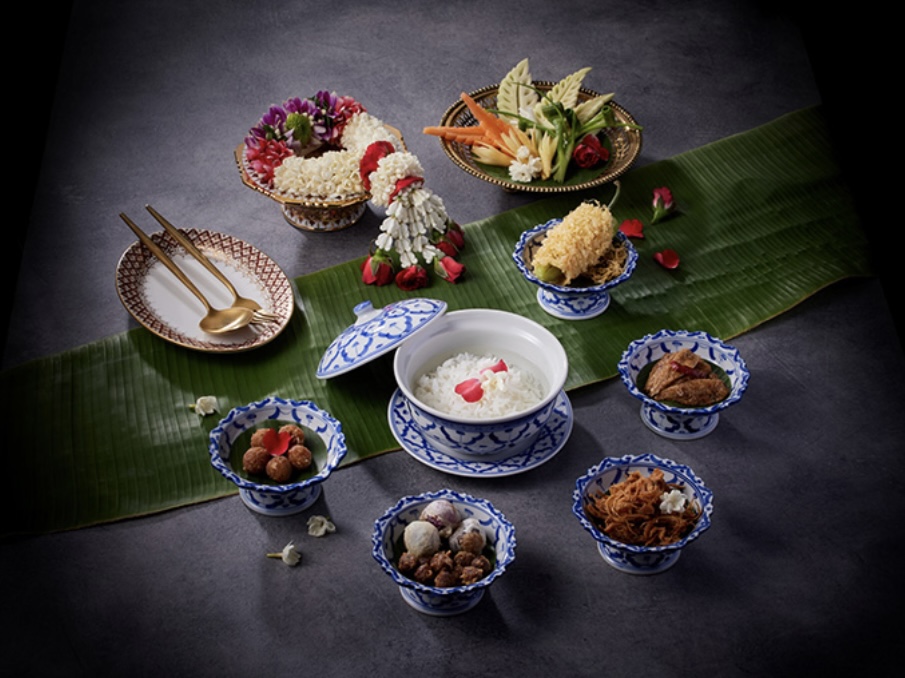
People love the dish not just for its camera-ready presentation but also because it allows diners to understand the long-treasured culinary traditions our forefathers have passed on to help us beat the sultry weather.
The history of khao chae dates back to the 18th century and the reign of King Rama V. The dish, comprised of rice soaked in water accompanied by a variety of side dishes, is believed to have originated in the Mon community and later made famous in the Thai royal court.
Preparing khao chae demands a long and meticulous, if not secretive, process of labour and understanding. Thus, its popularity faded over time due to the challenge.
The rice used to make khao chae must be old and repeatedly polished and rinsed to remove excess starch before it is steam-cooked. The reason is that when the old rice is soaked, it will retain its firmness and never turn mushy and the water won’t become cloudy from the starch either.
The water in which the rice is soaked has to be of specific quality too. It must be ice-cold and scented naturally with jasmine or chommanad (bread flour) and never an artificial scent.
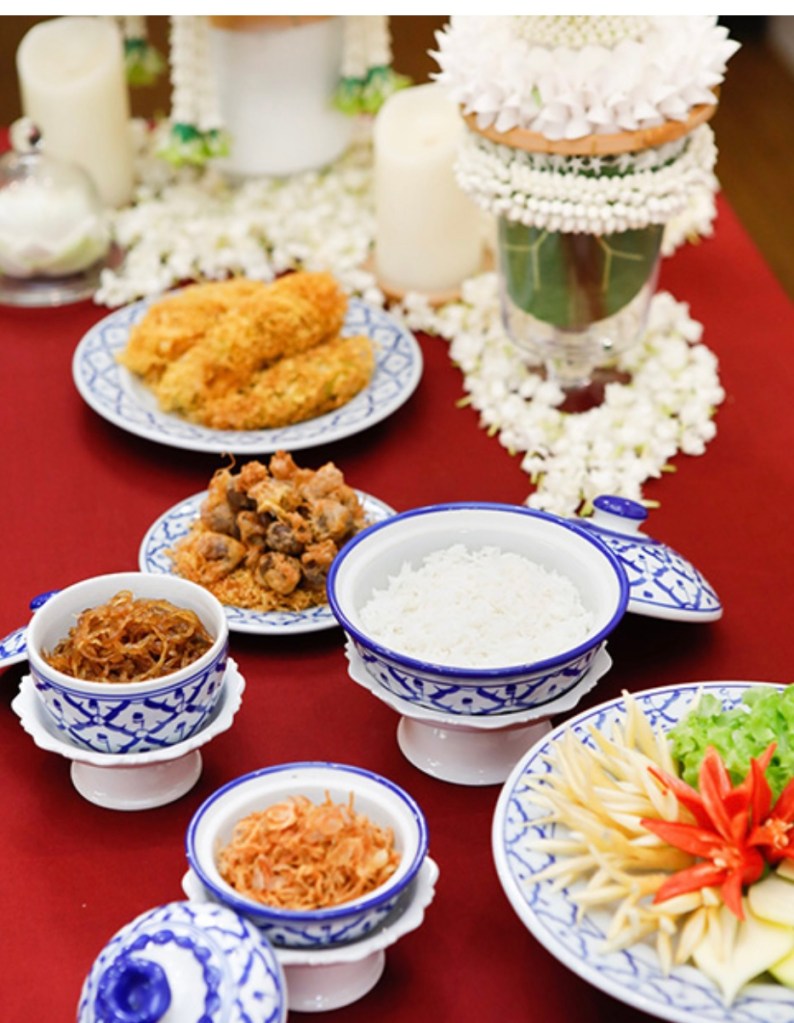
Accompanying the rice is at least half-a-dozen choices of bite-sized delicacies prepared — using intricate recipes — with very common Thai household ingredients and typical backyard plants.
Other commonly found and quintessential ingredients include luk kapi (deep-fried shrimp paste balls), hom dang yud sai (deep-fried stuffed shallots), phrik yuak sord sai (sweet pepper stuffed with seasoned minced pork and shrimp wrapped in crispy egg netting), chai pow phad kai (stir-fried sweet radish with egg), moo foi (sweet and crispy pork floss) and pla chon hang (caramelised dried fish) and neatly carved fresh fruit and vegetables — basically green mango, cucumber, krachai (fingerroot) and red chilli.
Eating khao chae too requires a certain tack. The proper way is to eat the rice and the side items separately, one spoonful at a time. Don’t put any side items into the rice as it will cloud the water and create an unpleasant odour and taste. Let try and enjoy Kao Chae that is available in Bangkok, Petchburi and other provinces in summer time for happiness and tasty dates back to the 18th century and the reign of King Rama V.
 BLUE BELL BRIGHT